Here's a stat that'll make your stomach drop: 73% of couples start their marriage in debt because of their wedding. And the average wedding debt? A jaw-dropping $17,400. That's not a down payment on your dream home, that's wedding debt you'll be paying off for years while trying to build your life together.
But here's the kicker: most couples are sitting on a goldmine and don't even realize it. Your wedding RSVP list isn't just a headcount tool, it's your secret weapon for funding your big day without drowning in credit card interest.
So why do so many couples miss this opportunity? Because they're still thinking about RSVPs the old-fashioned way: paper cards, stamps, and zero connection to their actual funding needs. It's time to change that.
The Real Cost of Traditional Wedding Planning
Let's get real for a second. The average American wedding costs around $30,000. Most couples drain their savings, max out credit cards, and some even take out personal loans with APRs hitting 15-20%. That's money that could be going toward your honeymoon, a house, or literally anything that doesn't charge you compound interest.
Why do couples do it? Because they think it's normal. The wedding industry has convinced us that going into debt is just "part of the process." It's not. And you don't have to accept that narrative.

The Digital RSVP Revolution
Here's where things get interesting. Online RSVPs aren't just about convenience, they're about creating a seamless connection between your guest list and your funding strategy. When done right, digital RSVPs can help you gather contributions, avoid unnecessary expenses, and actually fund your wedding while you plan it.
The secret? Strategic integration. These five tips will show you exactly how to transform your online RSVPs from a simple "yes or no" into a powerful funding tool.
Tip #1: Integrate Optional Contributions Directly Into Your RSVP Flow
Stop treating your registry and your RSVPs like they're two separate things. They shouldn't be. When guests respond to your invitation online, that's your golden opportunity to present them with a simple, optional way to contribute.
Here's how it works: After a guest confirms their attendance, they see a message like this: "Your presence means the world to us! If you'd like to help us celebrate with a contribution toward our future together, you can do so here. No pressure, just knowing you'll be there is gift enough."
Why this works: You're catching guests at the exact moment they're thinking about your wedding. The timing is perfect, and the friction is minimal. Platforms like Honeyfund and Zola have built entire businesses around this concept because it converts.
Pro tip: Make sure the contribution option is clearly marked as optional. You want enthusiasm, not obligation.
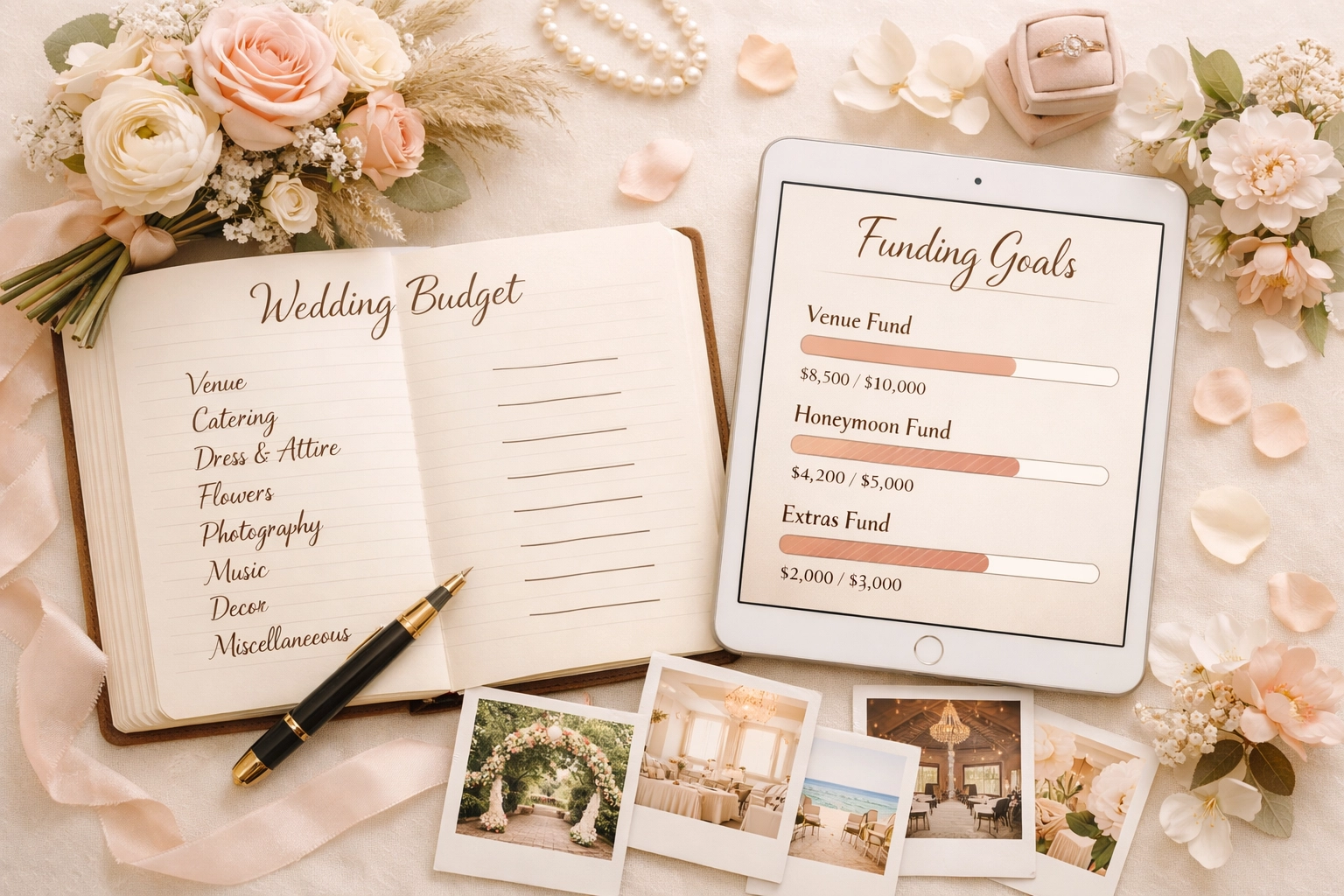
Tip #2: Display Specific Funding Goals Guests Can Actually Visualize
Nobody gets excited about contributing to "the wedding fund." That's too vague, too impersonal. But contribute $50 toward helping the couple enjoy a romantic dinner on their honeymoon in Italy? Now we're talking.
Break down your wedding budget into tangible, specific categories:
- "$8,000 for our dream venue overlooking the lake"
- "$3,500 for professional photography to capture every moment"
- "$5,000 for our honeymoon adventure"
- "$2,000 for flowers and décor"
The psychology behind this: People want to feel like their contribution matters and goes toward something real. When you give them specific targets, they can visualize exactly what they're helping create. Studies show that specific funding goals increase contribution rates by up to 40% compared to generic requests.
Link these goals directly to your RSVP confirmation page, so guests see them right after they respond.
Tip #3: Offer Tiered Contribution Levels for Every Budget
Not everyone can give $200, and that's totally fine. The mistake most couples make is presenting one suggested amount or leaving it completely open-ended. Both approaches leave money on the table.
Instead, create a tiered system with multiple price points:
- $25-50: Small but meaningful contributions
- $75-100: Mid-range gifts
- $150-250: Generous contributions
- $300+: For those who really want to go big
Here's why tiered levels work: They remove the awkward "how much should I give?" question. Guests see options that fit their budget, and they don't feel pressure to overextend or worry they're giving too little. It's about making everyone comfortable while maximizing your funding potential.
Add a note that says: "Any amount is appreciated, even $10 helps us get closer to our dream day!" This keeps things pressure-free while normalizing smaller contributions.
Tip #4: Use RSVP Data to Cut Costs in Real-Time
Here's something most couples never think about: your RSVP data is a budgeting superpower. Every "no" you receive is money saved on catering, rentals, and favors. But only if you're tracking it properly.
The smart approach: Set up your online RSVP system to automatically calculate cost savings. When someone declines, you immediately know you've saved $150-200 per person (the average cost per guest). That's money you can reallocate, save, or remove from your funding goal.
Even better? Use your RSVP trends to make proactive decisions. If you're getting more "no" responses than expected, you can:
- Downsize your venue and pocket the difference
- Reduce catering minimums before you're locked in
- Adjust decoration quantities
- Lower your overall funding target
Real talk: One couple we know saved $4,000 by tracking their RSVPs early and adjusting their vendor contracts before deposits became non-refundable. That's $4,000 they didn't have to borrow or scramble to find.

Tip #5: Create an RSVP Follow-Up Sequence That Encourages Late Contributions
Your funding opportunities don't end when someone clicks "accept." In fact, some of your biggest contributions might come weeks after the initial RSVP.
Set up a strategic follow-up sequence:
- Two weeks after initial RSVP: Send a warm thank-you message with a subtle reminder about contribution options
- One month before wedding: Share an update on how close you are to your funding goals (people love progress updates)
- Two weeks before wedding: Final gentle reminder with specific remaining needs
Keep the tone light and appreciative: "Thanks again for celebrating with us! We're 75% to our goal of covering our venue costs. If you'd still like to contribute, here's the link. Either way, we can't wait to see you!"
Why this works: Some guests genuinely want to contribute but get busy and forget. Others need time to budget for it. Your follow-up sequence gives them permission and opportunity without being pushy. Email platforms report that well-timed follow-ups can increase contribution rates by 25-30%.
The Bottom Line: RSVPs Are Your Funding Starting Point
Look, you're going to send RSVPs anyway. Your guests are going to respond anyway. So why not use that inevitable interaction to actually fund your wedding instead of just counting heads?
The couples who avoid wedding debt aren't necessarily the ones with more money: they're the ones who think strategically about every part of their planning process. They see opportunities where others see obstacles.
Your online RSVP system should work for you, not just for your caterer's headcount. It should connect your guest list to your funding strategy, help you cut unnecessary costs, and make it easy for guests who want to contribute to actually do so.
The wedding industry won't tell you this because they profit from your debt. Traditional vendors want you to believe you need to spend more, borrow more, stress more. But you don't.
You've got the guest list. You've got the technology. Now you've got the strategy. Use these five tips to transform your online RSVPs from a planning task into a funding tool. Your future debt-free self will thank you.
Ready to see how seamless this can actually be? Check out how digital RSVPs are changing wedding funding for more strategies that keep you out of debt while planning the wedding you actually want.